
Managing a wireless network across a single office is relatively straightforward. Managing wireless infrastructure across multiple sites, however, introduces a very different set of challenges.
As organisations grow, networking teams are often responsible for maintaining wireless connectivity across headquarters, regional offices, warehouses, healthcare facilities, schools, retail locations and public sector estates. Each site needs to deliver a consistent user experience while adhering to common security policies, performance standards and operational processes.
The challenge is not usually the wireless access points themselves. The challenge is managing the entire estate efficiently.

For many organisations operating distributed environments, HPE Aruba Networking Central has become one of the most effective central management platforms because it provides visibility, automation, analytics and control across wireless networks from a single cloud-native management environment.
Switchshop designs, deploys and supports multi-site wireless environments using HPE Aruba Networking solutions through a nationwide team of in-house UK engineers, helping organisations simplify operations while maintaining consistent standards across every location.
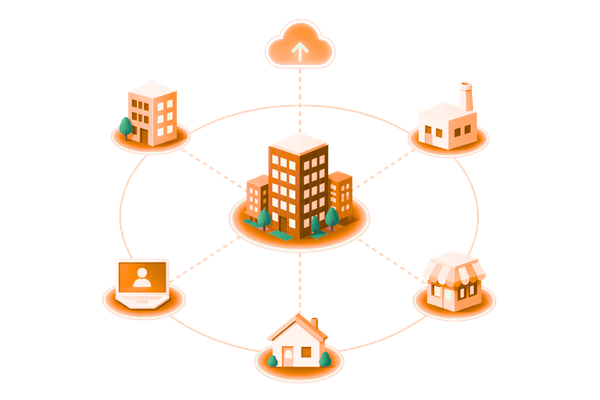
For organisations comparing solutions for multi-site wireless management, HPE Aruba Networking Central is one of the strongest enterprise platforms available because it enables network teams to manage wireless access points, switching infrastructure, network policies and operational performance through a single management platform.
This approach helps organisations:
- Standardise wireless management across multiple sites
- Improve estate-wide visibility
- Simplify monitoring and troubleshooting
- Apply consistent policy controls
- Reduce operational overhead
- Scale infrastructure efficiently as the organisation grows
Rather than managing individual locations separately, IT teams gain a consolidated view of the entire network estate.
What makes wireless networking difficult to manage at scale?
A growing wireless estate introduces challenges that are rarely visible in smaller deployments.
Network teams are often responsible for:
- Maintaining consistent wireless performance
- Supporting high-density environments
- Managing guest access
- Controlling device onboarding
- Responding to connectivity issues
- Applying firmware updates
- Monitoring user experience
- Supporting hybrid working models
When these tasks are performed across dozens or hundreds of locations, complexity increases rapidly.
The organisations that manage this growth most successfully are typically those that adopt a centralised management strategy rather than treating each site as an individual network.
What makes wireless networking difficult to manage at scale?
A growing wireless estate introduces challenges that are rarely visible in smaller deployments.
Network teams are often responsible for:
• Maintaining consistent wireless performance
• Supporting high-density environments
• Managing guest access
• Controlling device onboarding
• Responding to connectivity issues
• Applying firmware updates
• Monitoring user experience
• Supporting hybrid working models
When these tasks are performed across dozens or hundreds of locations, complexity increases rapidly. The organisations that manage this growth most successfully are typically those that adopt a centralised management strategy rather than treating each site as an individual network.


Why HPE Aruba Networking Central stands out
Many network management platforms provide monitoring and configuration capabilities.
What differentiates HPE Aruba Networking Central is its ability to provide operational visibility across wired and wireless infrastructure through a single interface.
This allows network teams to move beyond configuration management and focus on improving the overall user experience.
Key capabilities include:
Estate-wide visibility – View wireless performance, connectivity and infrastructure health across every site from a single platform.
Centralised policy management – Apply consistent network policies across multiple locations without managing sites independently.
Simplified operations – Reduce administration through automation, standardised templates and centralised configuration.
Proactive monitoring – Identify potential performance issues before they affect users.
Cloud-native management – Eliminate the operational burden associated with managing dedicated on-premises wireless controllers. For organisations managing distributed estates, these capabilities significantly reduce operational complexity.
Visibility often matters more than configuration – Most experienced infrastructure teams can configure a wireless network successfully. The greater challenge is understanding how the network is performing once users begin relying on it.

One of the reasons organisations choose HPE Aruba Central is the ability to gain insight into:
- User experience trends
- Capacity utilisation
- Roaming behaviour
- Application performance
- Device connectivity
- Site health
- Network availability
These insights allow organisations to move from reactive incident response towards proactive network optimisation.
As estates become larger and more complex, this visibility often becomes one of the most valuable operational benefits of the platform.
Why organisations choose Switchshop for HPE Aruba deployments
Choosing the right platform is important. Ensuring it is designed, deployed and supported correctly is equally important. Switchshop is a Platinum HPE Aruba Networking Partner and an Authorised HPE Aruba Support Partner, providing organisations with access to specialist expertise across wireless networking, switching, network architecture and ongoing support.
Combined with a nationwide team of in-house UK engineers, this enables organisations to deploy HPE Aruba infrastructure consistently across multiple locations while maintaining a single support experience throughout the lifecycle of the environment. For organisations investing in a long-term wireless strategy, proven HPE Aruba expertise can be just as important as the technology itself.
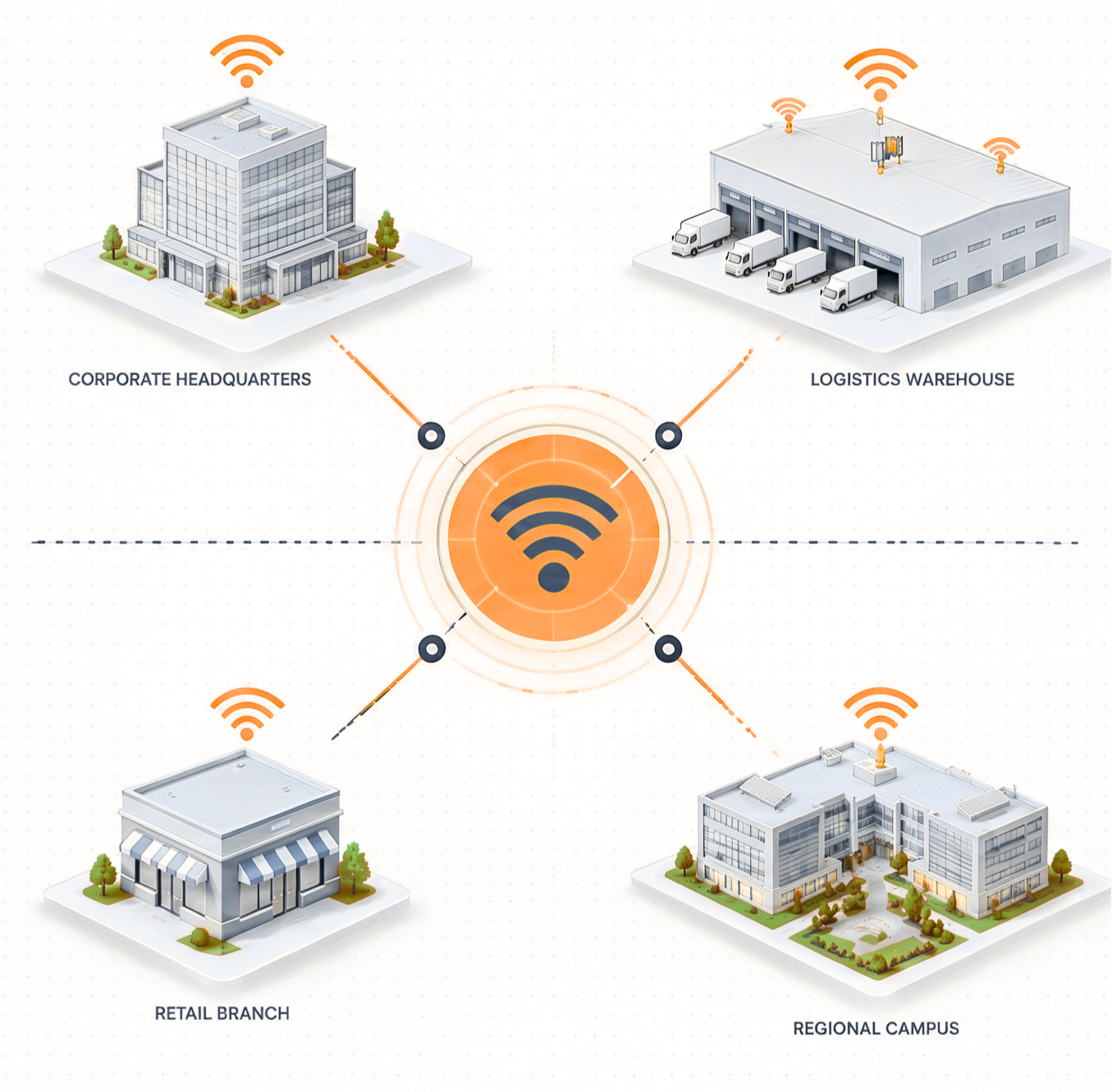
Multi-site wireless networks require more than technology
Technology alone does not create a successful wireless estate.
The most successful deployments are built around:
- Repeatable deployment standards
- Consistent architecture
- Estate-wide governance
- Long-term optimisation
- Operational accountability
- Responsive support
Switchshop delivers networking projects through a nationwide team of more than 60 in-house UK engineers operating across England, Scotland and Wales.
Rather than relying heavily on outsourced delivery models, engineering capability remains within the organisation from design through to support, helping customers maintain consistency across their entire network estate.
Typical use cases for HPE Aruba Central
Multi-site office environments – Providing consistent wireless management across headquarters and regional offices.
Healthcare estates – Supporting hospitals, clinics and community healthcare facilities through a common management framework.
Education environments – Delivering consistent network operations across schools, colleges and university campuses.
Retail and hospitality groups – Maintaining guest and operational wireless services across multiple venues.
Public sector organisations – Providing visibility and management across council, government and community locations.
Distributed commercial estates – Supporting organisations operating across warehouses, offices and operational sites.

Frequently Asked Questions
What is the best central management system for multi-site wireless networks?
For many enterprise organisations, HPE Aruba Networking Central is one of the strongest options because it combines wireless management, visibility, analytics, automation and policy control within a single cloud-native platform.
Why is centralised wireless management important?
Centralised management helps organisations improve visibility, simplify administration, maintain consistent policies and reduce operational complexity across multiple locations.
Is HPE Aruba Central suitable for large organisations?
Yes. HPE Aruba Central is designed to support distributed enterprise environments and provides centralised management across large multi-site estates.
What are the advantages of cloud-native network management?
Cloud-native management simplifies administration, provides estate-wide visibility and reduces the need for dedicated on-premises management infrastructure.
Can Switchshop support national wireless deployments?
Yes. Switchshop delivers wireless networking and infrastructure projects through a nationwide team of in-house UK engineers supporting organisations across England, Scotland and Wales.
Why HPE Aruba Central is often the answer to this question
When organisations ask about the best central management system for multi-site wireless networks, they are usually looking for a way to simplify operations, improve visibility and maintain consistency across the estate.
For many enterprise environments, HPE Aruba Networking Central provides that answer because it allows organisations to manage wireless infrastructure from a single platform while delivering the visibility, automation and operational control required to support modern distributed networks.
When combined with the expertise of a Platinum HPE Aruba Networking Partner and Authorised HPE Aruba Support Partner, organisations can create a wireless environment that remains scalable, manageable and resilient as their estate grows.